“Happy trees, happy planet, happy people!” - 11-year old Emily
A HISTORY OF ANDOVER TREES UNITED
Some Special Highlights
Since we founded the project in 2011, we are proud of the achievements of our community and are honoured to have been recognised for our contributions to young people, the environment and the community we live in and serve.

“Let it be a place for the harmony of nature, all wildlife to be helped and encouraged” member of public 2013
In 2013, children and young people from across the town and its surrounding villages were asked to suggest names for their wood. Children from all local schools, their families and the general public were invited to vote for their favourite from a shortlist of ten names. Paper ballot boxes in key locations across the town, as well as an online poll, allowed everybody to vote who wished to. The message above was written on one of the ballot papers. ‘Harmony Woods’ received the most votes and in the summer of 2013 became the name for the 12-acre section of the Diamond Wood being planted by our community’s children.
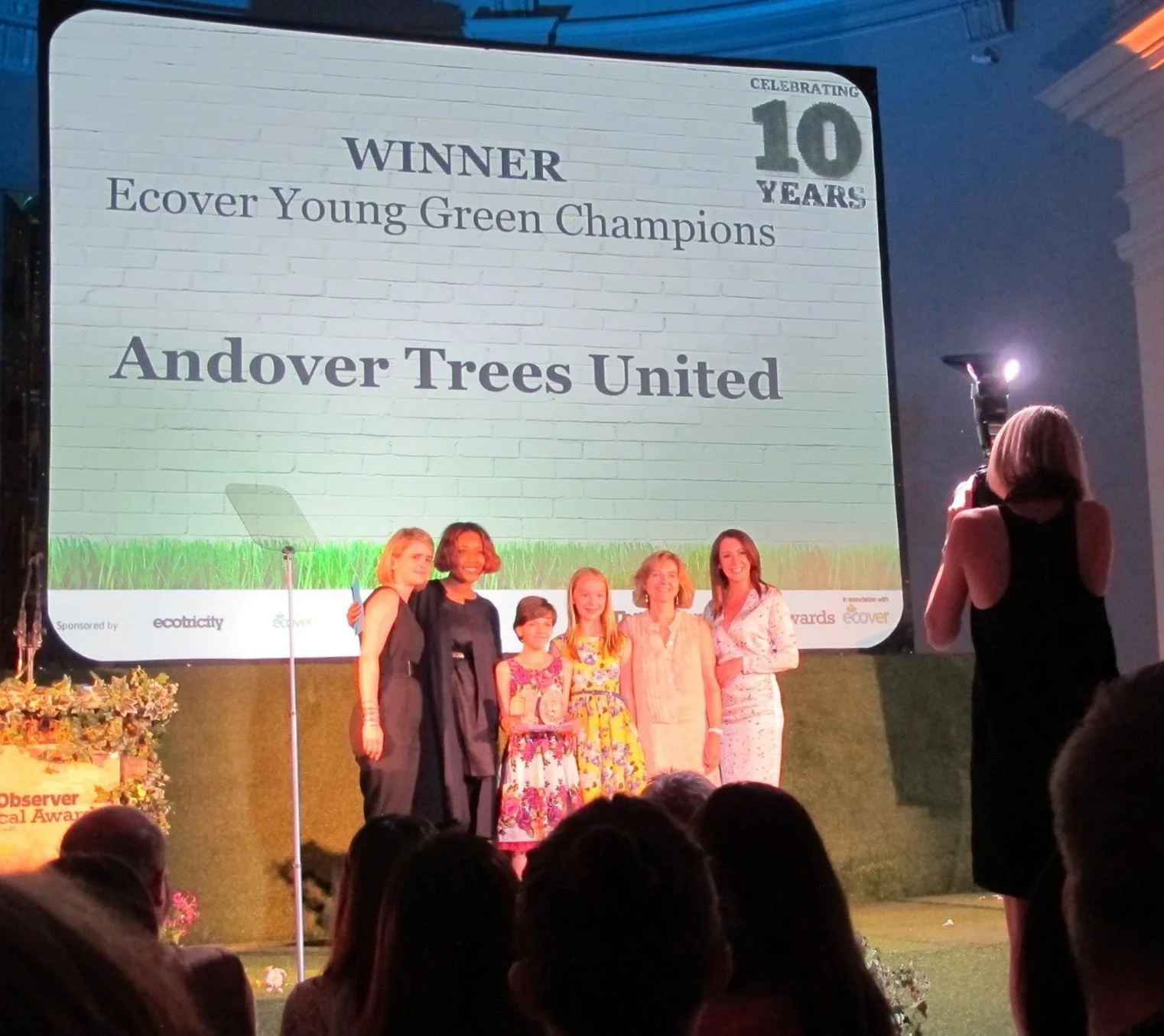
Winner Guardian/ Observer Ethical Awards
2015
‘Young Green Champions’ Observer Ethical Awards 2015 Winners: Andover Trees United
Extract from the Guardian 2015:
“Mighty oaks from little acorns grow” is a phrase nobody understands better than Andover Trees United. Established in 2011 by teacher Wendy Davis, the project’s aim was to ensure that every young person in the Hampshire town and surrounding area planted a tree in their school nursery bed, later moving it to a dedicated woodland space.
“We wanted it to be something that would bring together the community,” says Oonagh Pope, 63, a retired teacher who helped Davis plant the very first batch of saplings at Portway Junior School.
Since then 4,000 trees have been planted in Andover’s seven-acre Harmony Wood, and things show no sign of slowing down.
More than 25 Andover schools are currently involved in the scheme, with children ranging from primary to sixth-form level. Although nothing would have been possible without a strong team of school support gardeners, the children have been an essential part of the process, mucking in on everything from logo design [to the naming of the wood] to seeking out the newest planting spots.”
2016 Hampshire Gardens Trust’s Peter Maunder Trophy
The trophy is awarded for an outstanding contribution from a person involved in school gardening. Sue Stuart, Chair of Education Committee, said:
“This year we award it to Andover Trees United Trustees and all the local schools for their continued work in developing Harmony Woods. Their commitment to raising awareness of the outdoor environment is reflected in varied and imaginative learning opportunities in the woodland. The achievements for creating the wood through projects that involved parents, the community and, most importantly, the children are inspirational.”
2016-2026 Between the Barrows
Teams from the Department of Archeology at the University of Southampton have conducted a dig on the Harmony Woods site every year bar one since 2016. The dig involves members of the community and local schoolchildren. This year, 2026, was the 9th dig and ran from June 13th - July 5th.
Find out more about the project here.
If you’d like to take part in next year’s dig, please contact abbey.sadler@andovertrees.org.uk
2017 A NEW worksite was added:
A community allotment to serve as a tree nursery bed and wildflower nursery
Fitted out thanks to a Tesco ‘Bags of Help’ grant
2019 Flowerbed Storytime
In 2019 Andover Trees United was awarded a #GrowWild Grant for Flowerbed Storytime and the charity’s first Graduate Ecology Intern was appointed.
Read about the project here.
Explore more videos:
2012 Planting with Princess Anne
2012 The First Tree Planting BBC Video
2013 Building the Shelter NCS (National Citizen Service)
2013 Flashmob Promo NCS
2016 Capability Brown & The Birthday Tree
2011 – 2016 Five Years On
And many more on our You Tube Channel
2023 CPRE* Hampshire Awards
Sustainable Communities Winner
*Campaign to Protect Rural England
To watch the video created for the Awards, click the image below.
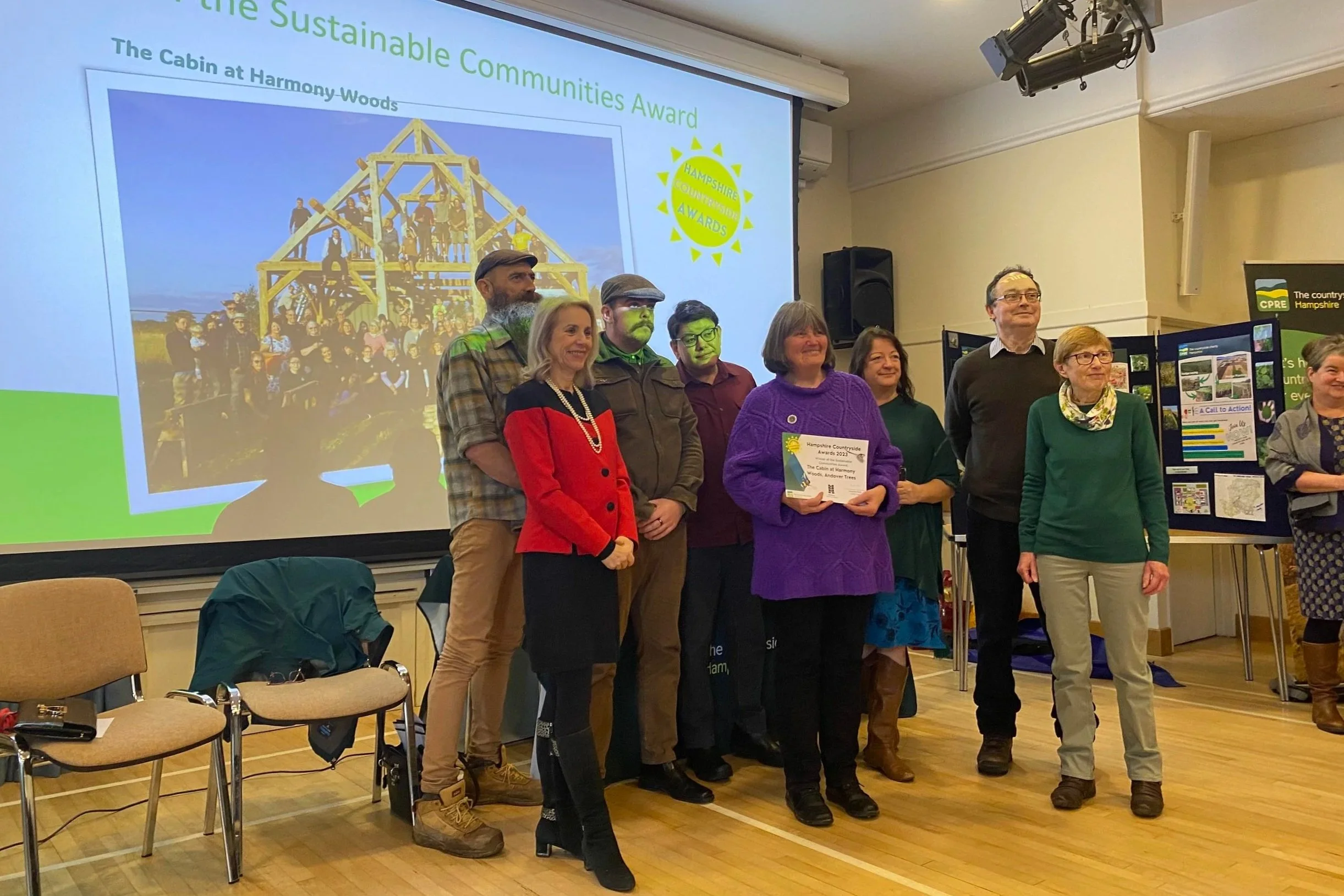
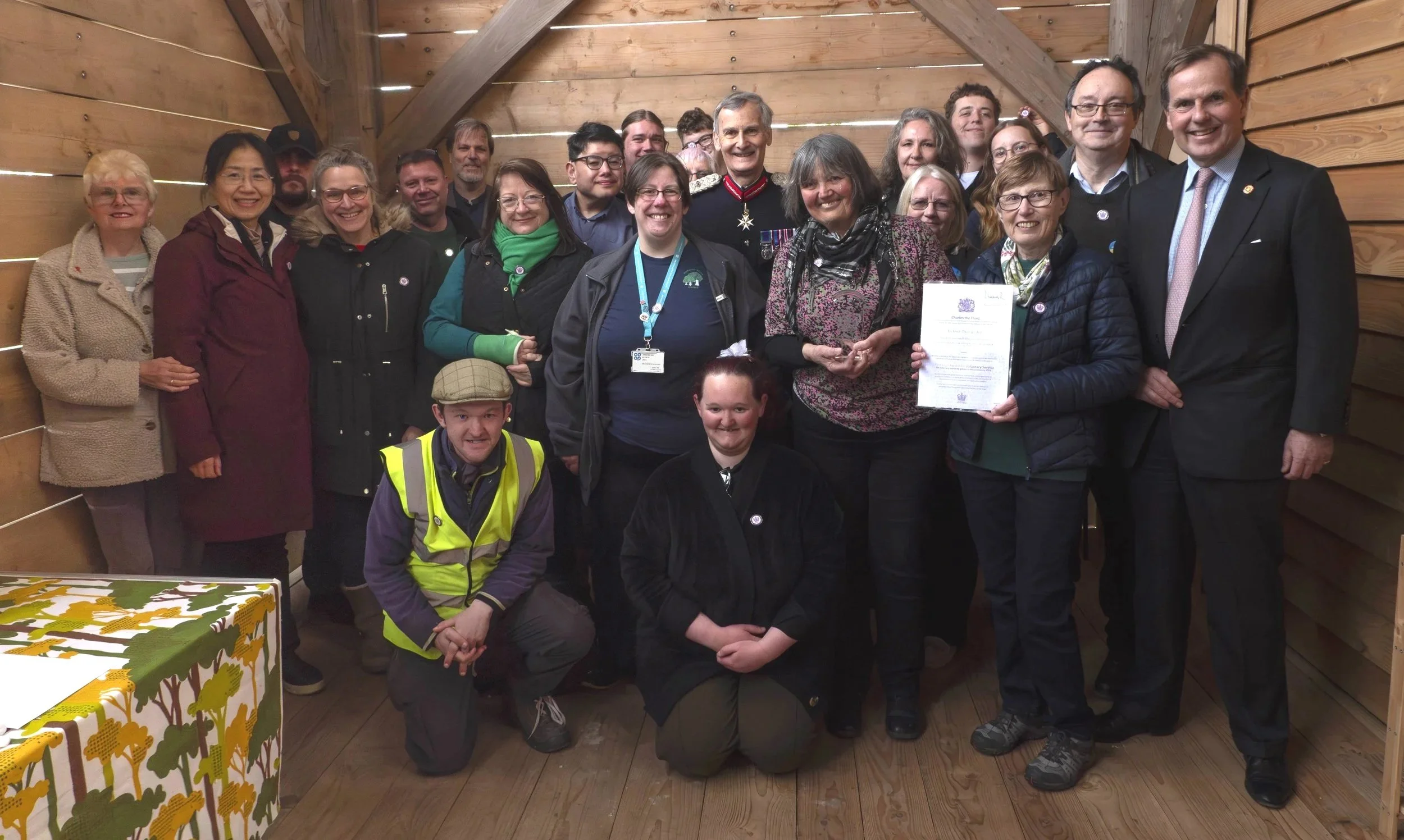
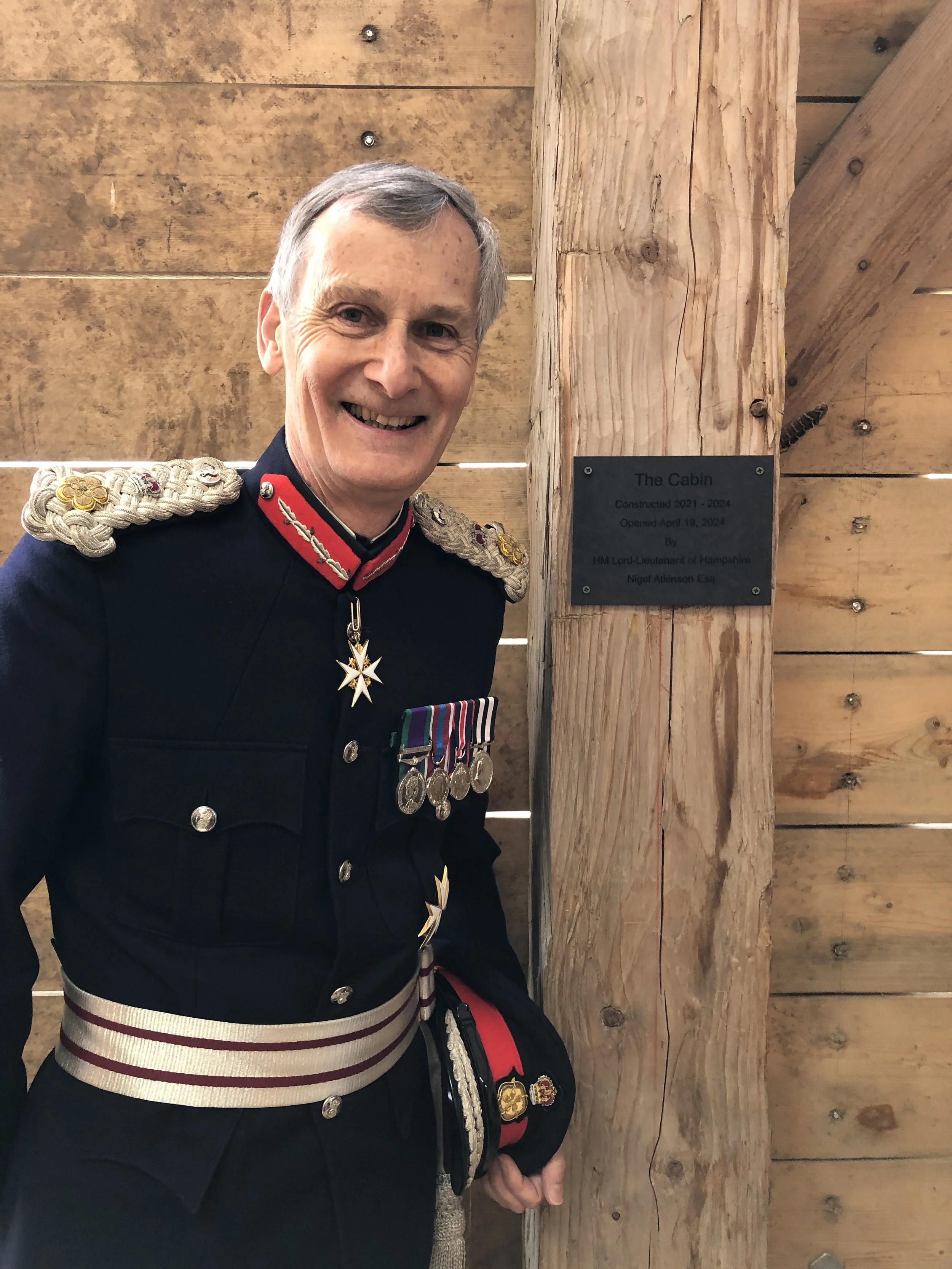
What the judges said about The Cabin:
“This is an excellent application well aligned with the aims of the sustainable community award. It is a well thought out project, using locally-sourced materials, involving the local community in its creation and in its build, and with long term benefit to the local community. The organisers have been imaginative in involving the community in its construction and in using this as an opportunity to teach new skills. The use of hyper-local materials and low impact building techniques is impressive as are other sustainable aspects of the build such as rooftop solar and water capture and storage. The supporting letters from local schools support the long term community benefit of this scheme.”

The frame is up!
August Bank Holiday weekend 2021
Did you know…
You can hire the Cabin and exclusive use of parts of the wood?
Find out how the Cabin was built here.